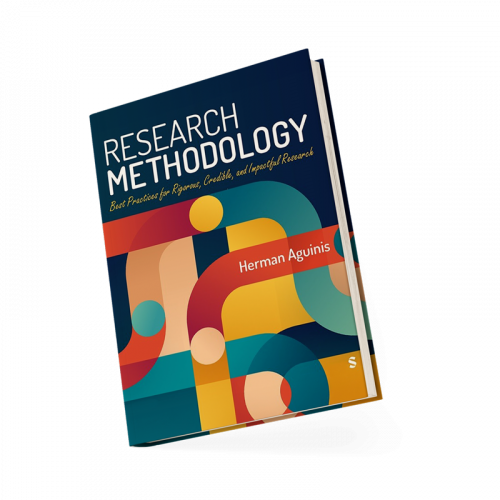
About the Book:
Research Methodology: Best Practices for Rigorous, Credible, and Impactful Research takes a 360-degree view of understanding and doing research, helping readers become expert researchers, reviewers, and consumers of research. Renowned author, journal editor, and researcher Herman Aguinis distills the vast work on methodological best practices into a singular experience. Each of the 16 chapters thoroughly explains a different aspect of methodology step by step, from choosing useful and compelling research topics to reporting results accurately and credibly. Researchers at all career stages will find this text helpful to structure and conduct high-impact empirical research to produce a thesis, dissertation, or journal publication. Research consumers will find instructions on evaluating the rigor and credibility of research conducted by others. Instructors will find the book’s modular approach refreshing by assigning students the most relevant topics—from checklists of best practices to an in-depth methodology treatment. Filled with “how-to’s” and “dos and don’ts,” figures, hands-on exercises, and “Methods in Practice” boxes that summarize and apply best practices, this book is a must-have for anyone interested in producing or reading research.
President Review:
Herman Aguinis is undoubtedly one of the most esteemed and accomplished researchers on the global stage. His prolific and impactful research portfolio has long set the benchmark for academic excellence. Yet, his latest book transcends even his high standards, serving as nothing less than a game-changer in research methodology.
This book redefines what it means to create “research gold.” It masterfully combines rigor, clarity, and insight to provide readers with a definitive guide that resonates with seasoned academics and budding researchers. In many ways, it evokes comparisons to The Elements of Style, the timeless masterpiece by Strunk and White that became a cornerstone for understanding English composition and style. Much like Strunk’s work, Aguinis’ book meticulously lays out the principles of research design, execution, and analysis, addressing the foundational “rules of usage,” principles of rigor, common pitfalls, and best practices. It serves as both a practical manual and an intellectual beacon, ensuring that the quality and integrity of research are upheld.
In an era when research volume often overshadows its quality, Aguinis reminds us of the essence of pure, impactful research. His work challenges us to reimagine the purpose of research—not merely as a means to publish but as a pathway to generate meaningful, credible, and actionable insights that advance human knowledge.
This book is unparalleled for anyone seeking a comprehensive, reliable, and authoritative resource on research methodology. Aguinis is not merely an author—he is an originator, setting the standard for how research should be conceptualized and executed. Whether you are a student embarking on your first research journey or an experienced scholar striving for excellence, this book is an indispensable tool that will elevate your work and deepen your understanding of the research process.
In short, Herman Aguinis’ latest contribution is more than just a book; it is a legacy. It is the go-to guide for anyone who wants to master the art and science of research, and it will undoubtedly remain a touchstone in the field for years.